Acne scar treatment in Busan, Seomyeon
Match the treatment to the scar type,
then rebuild texture gradually.
Acne scars can include rolling, boxcar, ice-pick, raised scars, and post-inflammatory color changes. Treatment planning starts by identifying the dominant scar pattern, skin type, active acne status, and acceptable downtime. Depending on the physician's assessment, resurfacing or collagen-remodeling approaches may be combined rather than relying on one method for every scar.
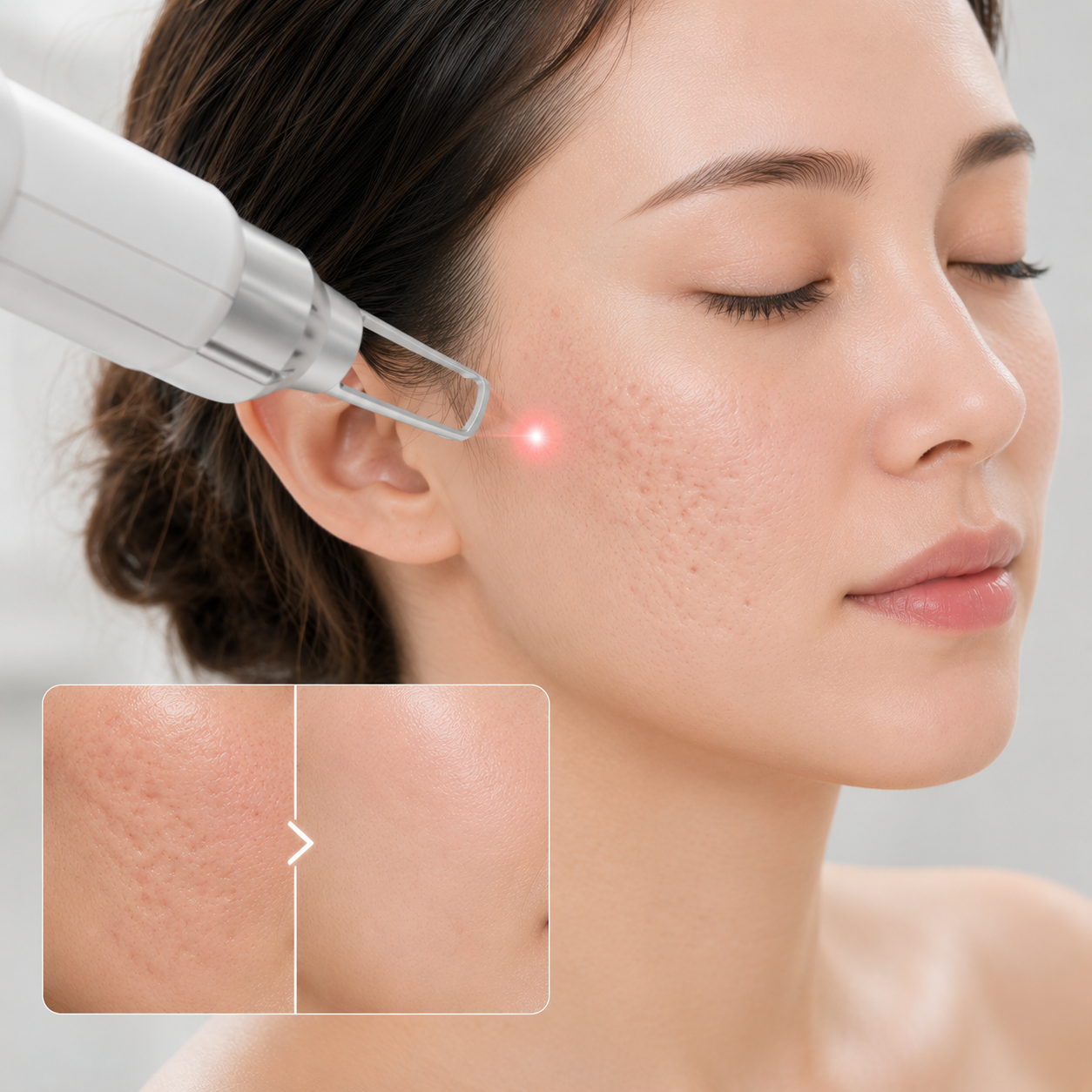
At a glance.
- Treatment time
- Usually 30–60 minutes
- Early changes
- Often over 4–8 weeks
- Downtime
- Varies by modality
- Sessions
- Personalized series
- Newline pricing
- Confirmed options below
Before & after.
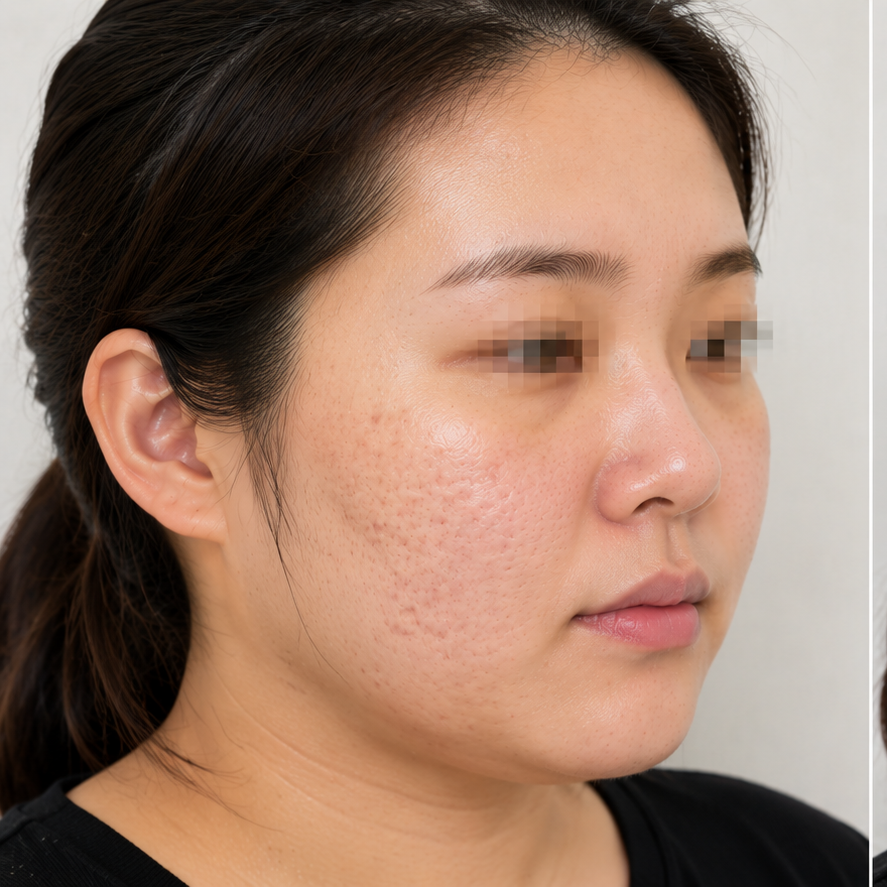 Before Photo · 1:1
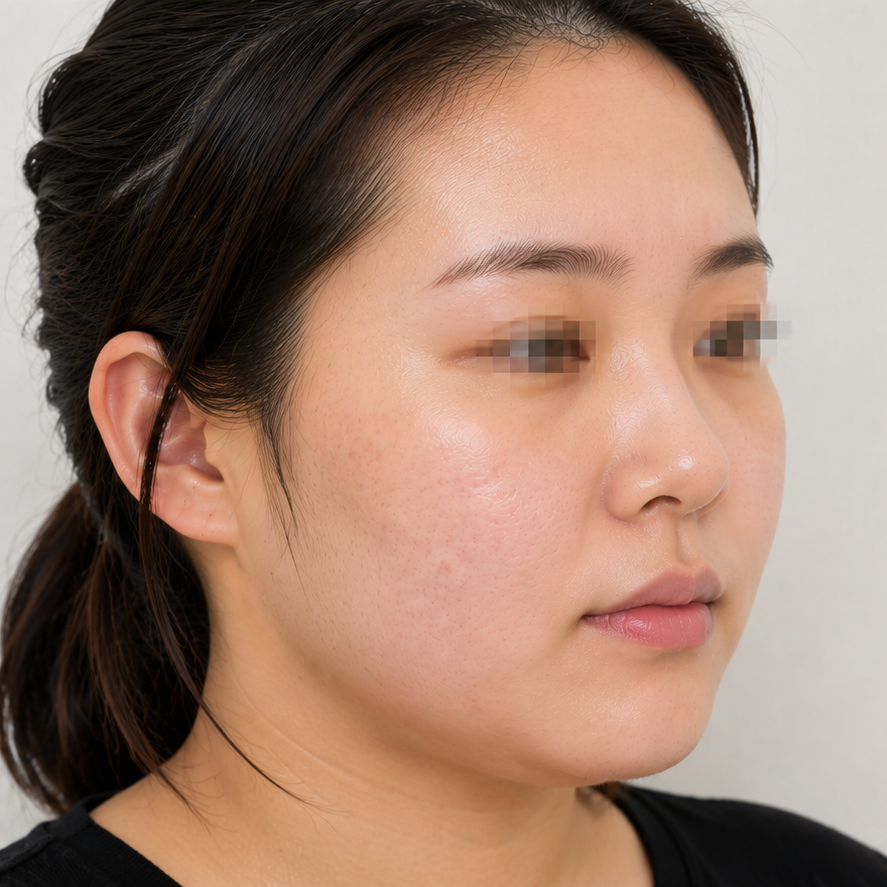 After Photo · 1:1
What is Acne Scar Treatment?
Different scars need different approaches.
Acne scar treatment is rarely one-size-fits-all because scar shape and depth differ. Rolling scars are broad depressions that may benefit from collagen remodeling and, in some cases, release of tethering. Boxcar scars have sharper edges and may respond to fractional resurfacing that softens texture over a series. Ice-pick scars are narrow and deep, so focal methods may be considered in addition to resurfacing. Post-inflammatory red or brown marks are a different problem from true depressed scars and may require pigment- or redness-focused care. The treating physician should match the plan to scar morphology, skin type, active acne status, and downtime tolerance.
The process
,
simplified.
The goal is to identify what is actually creating the uneven texture, then choose an intensity and combination that fit your skin and recovery window.
Scar-type assessment
The physician assesses rolling, boxcar, ice-pick, raised scars, post-inflammatory marks, pore texture, active acne, and skin sensitivity before selecting a plan.
Preparation & numbing
Topical numbing may be used when appropriate. Preparation depends on the selected treatment, current skincare, medication history, and skin condition.
Targeted treatment
Fractional resurfacing, RF microneedling, MTS, Trifill, or other physician-selected approaches may be considered according to the dominant scar pattern and treatment goal.
Healing & remodeling
Redness, swelling, dryness, peeling, or pinpoint crusting can occur depending on intensity. Texture improvement develops gradually as the treated skin heals and collagen remodels.
Match the scar pattern
,
not just the label.
The same face may contain several scar types. The table below describes common clinical approaches; the exact Newline protocol is decided after examination.
| Scar / concern | Common approach | Typical planning point | Notes |
|---|---|---|---|
| Rolling scars | Collagen remodeling; tether-release methods may be considered | Series often needed | Depth and tethering matter |
| Boxcar scars | Fractional resurfacing / remodeling | Intensity varies | Sharper edges may need layered care |
| Ice-pick scars | Focal scar methods plus resurfacing may be considered | Often staged | Very deep narrow scars respond differently |
| Post-acne red/brown marks | Pigment/redness-focused care | Separate from depressed scars | Sun protection is important |
| Raised / hypertrophic scars | Needs separate medical assessment | Not treated like depressed scars | Keloid tendency changes planning |
Current skin-treatment
options.
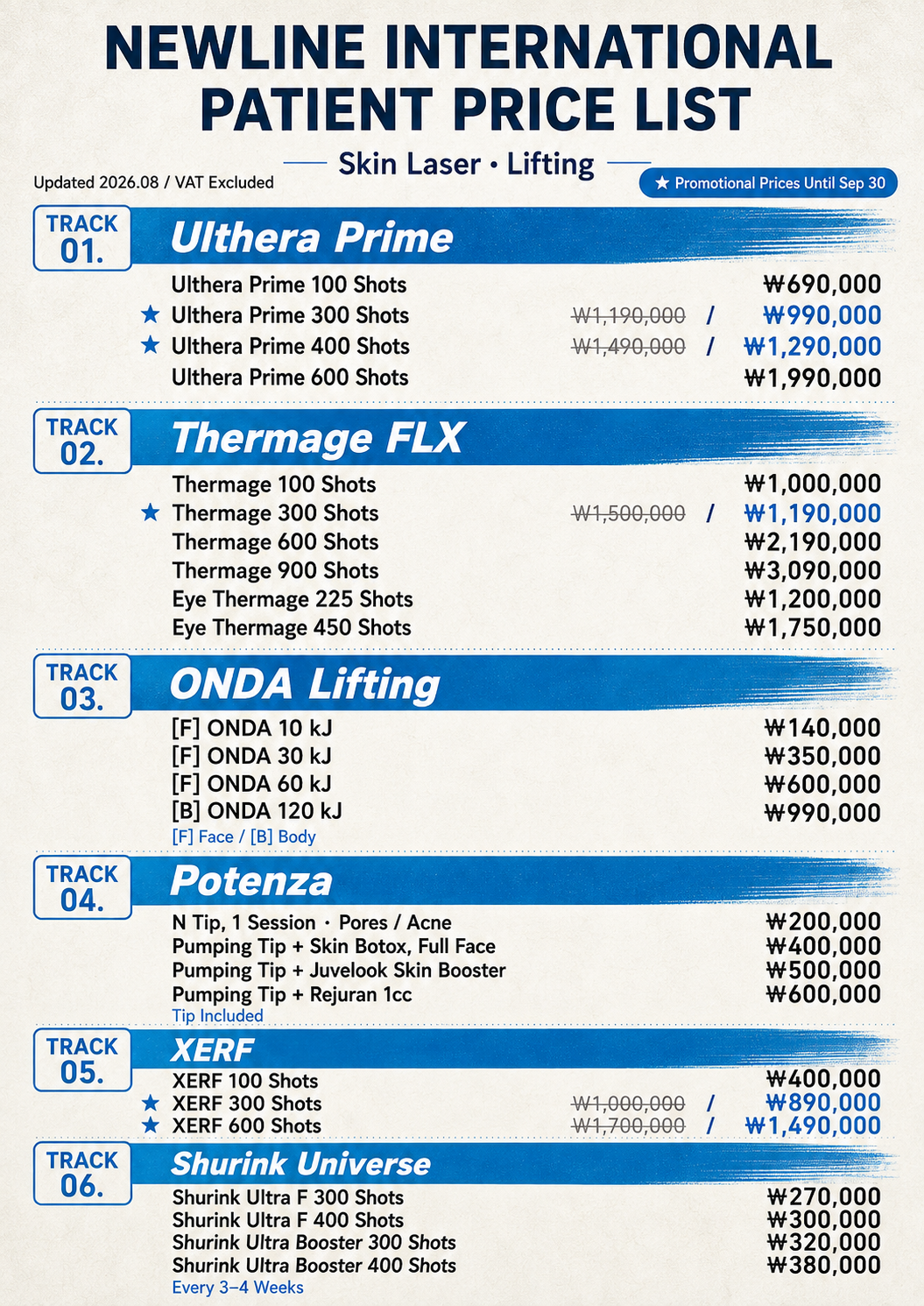
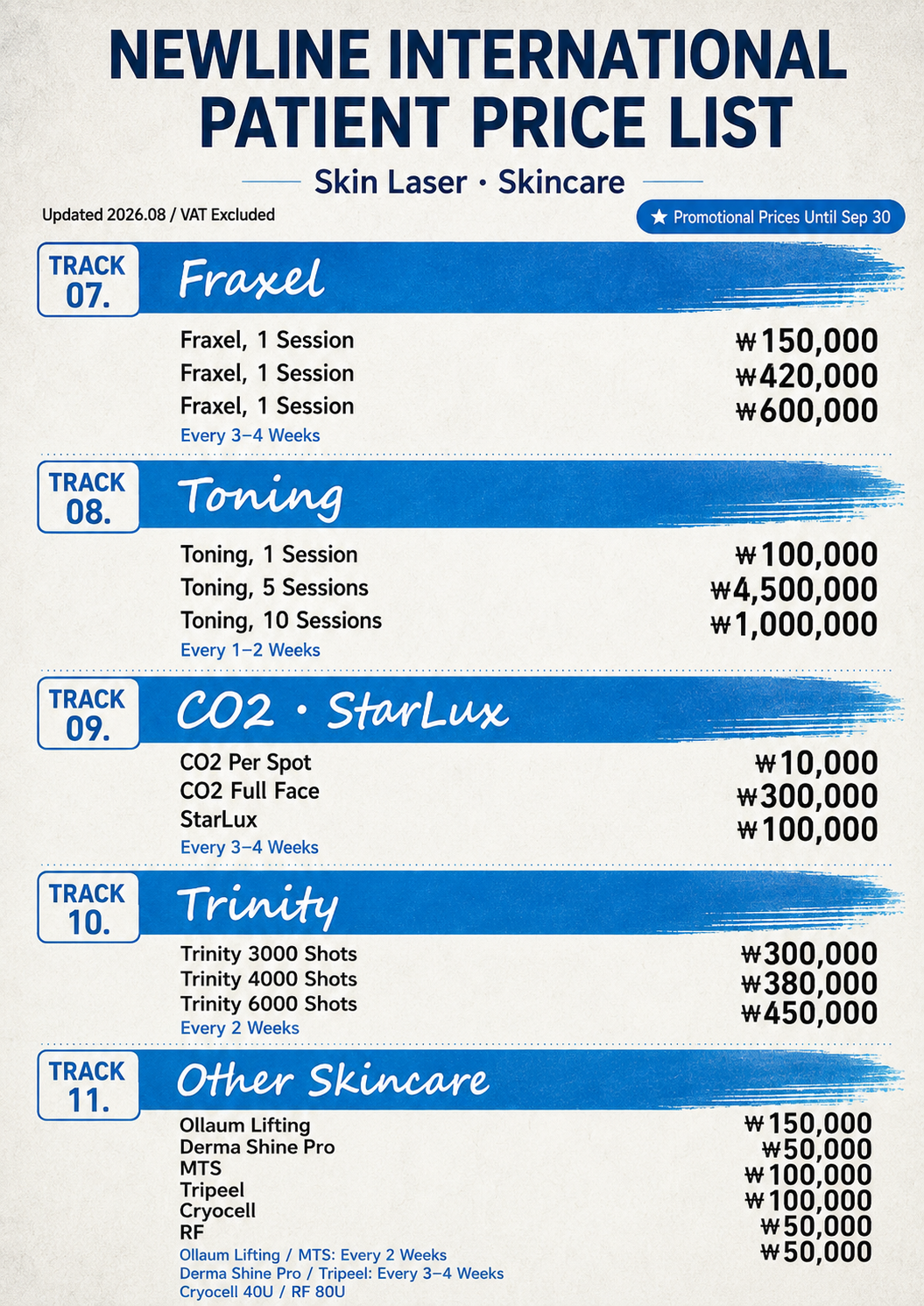
These are confirmed Newline Clinic prices from the current treatment sheet. They are listed as available skin-treatment options; the physician determines whether any option is appropriate for your acne-scar pattern. Unconfirmed source-clinic device prices have been removed.
| Treatment | Price | What is confirmed | Booking note |
|---|---|---|---|
| Fraxel | ₩150,000 | 1 session | Exact device/settings confirmed at consultation |
| Potenza N Tip | ₩200,000 | 1 session · tip included | Suitability depends on skin and scar type |
| MTS | ₩100,000 | Listed treatment price | Protocol confirmed by physician |
| Trifill | ₩100,000 | Listed treatment price | Protocol confirmed by physician |
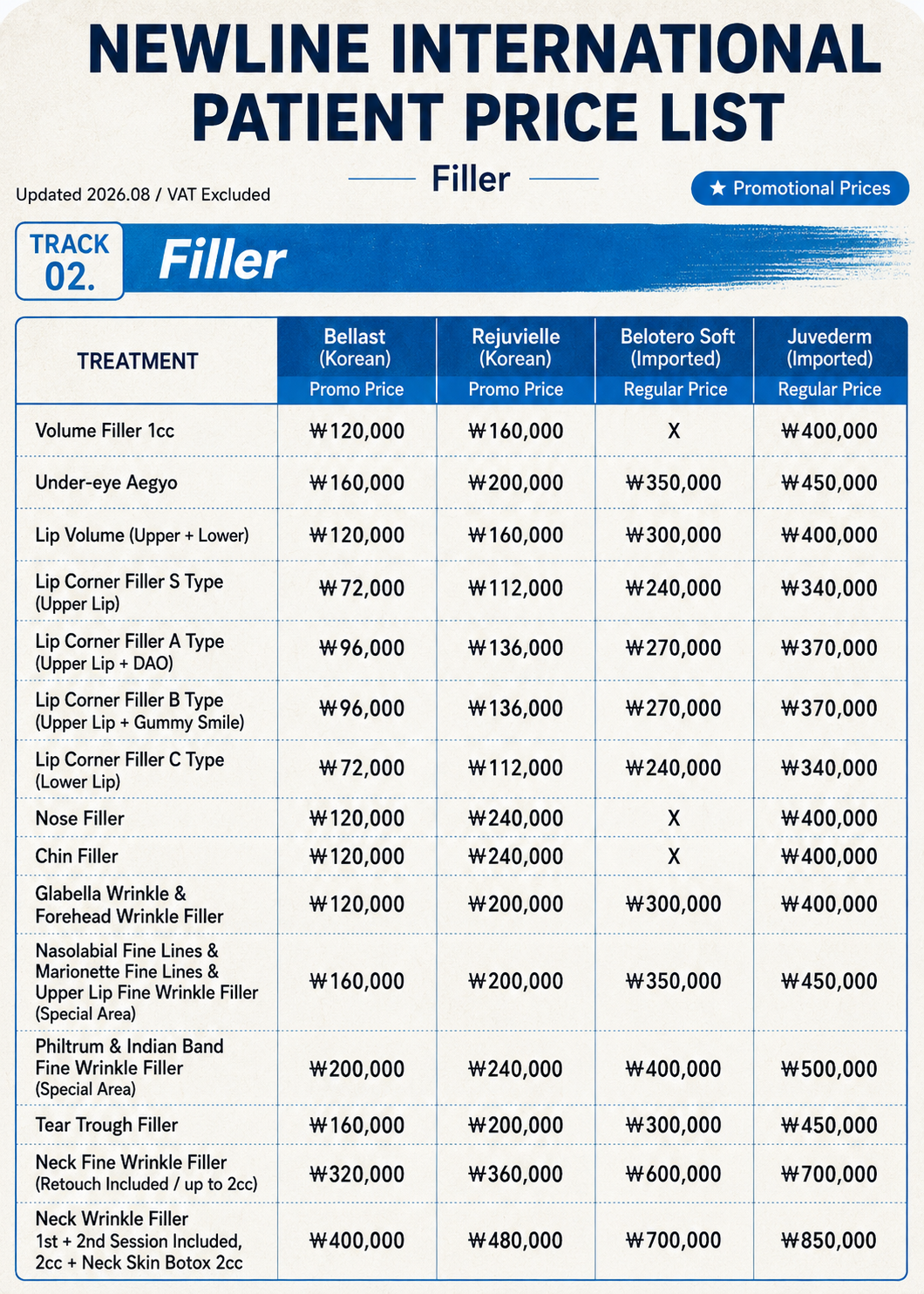
| Rejuran Healer | ₩480,000 | 2cc | Adjunct suitability confirmed at consultation |
Final pricing, treatment combination, dosage, tip selection and session plan are confirmed after consultation. No source-clinic package pricing is carried over.
Good candidates &
who should wait.
Every treatment has ideal candidates and situations where it's not recommended. Safety first — always.
Good candidates
- Rolling, boxcar, or mixed acne scars
- Stable scarring (not active acne breakouts)
- Realistic expectations that improvement is gradual and complete scar erasure is uncommon
- Able to commit to a treatment series if recommended
- Able to follow recovery and sun-protection instructions between sessions
Not ideal for
- Active acne (must be controlled first)
- Current or recent isotretinoin use — timing must be reviewed with the treating physician
- Keloid-prone skin (need scar test patch first)
- Pregnancy or breastfeeding
- Recent sun exposure or tanning
What happens after.
Recovery depends heavily on treatment intensity. Follow the clinic's specific instructions for the modality you actually receive.
After your treatment
- Use only the post-treatment products or ointment recommended by the clinic.
- Avoid picking, scratching, peeling, or manually removing crusts.
- Use gentle cleansing and avoid strong exfoliating acids or retinoids until the skin barrier has recovered.
- Avoid intense heat, saunas, swimming, and heavy exercise for the period advised by the physician.
- Use broad-spectrum sunscreen and minimize direct sun exposure during healing.
- Wait until the treated skin has adequately recovered before resuming makeup, according to the procedure-specific instructions.
Possible side effects
- Temporary redness, warmth, tenderness, or swelling
- Dryness, tightness, peeling, or fine crusting depending on modality
- Temporary darkening of spots or post-inflammatory color change
- Short-term sensitivity to skincare products
- Prolonged redness or post-inflammatory hyperpigmentation
- Infection, delayed healing, blistering, or scarring
- Acne flare or irritation in susceptible skin
- Contact the clinic promptly for worsening pain, spreading redness, pus, fever, or unexpected skin changes
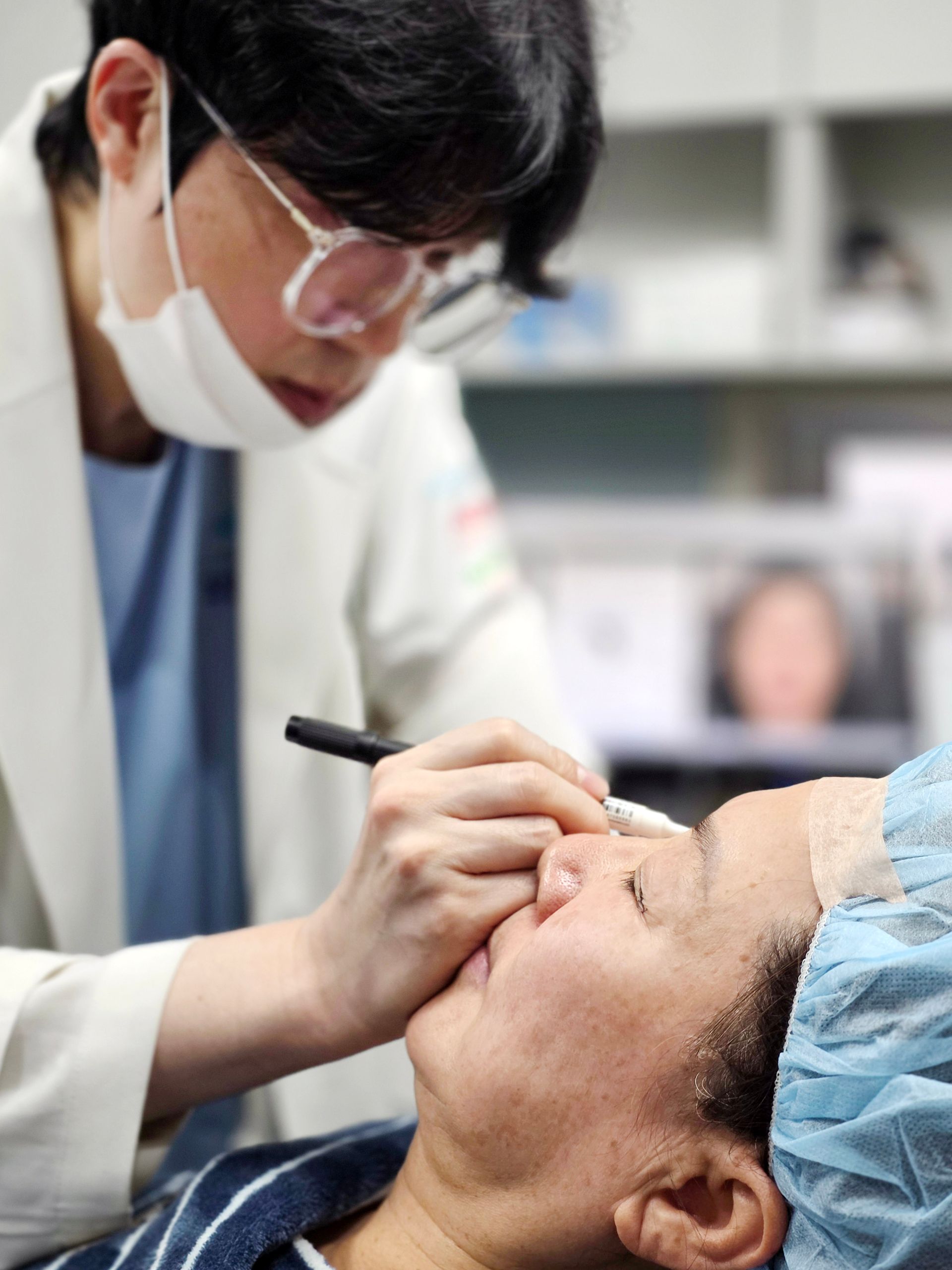 Doctor Portrait
Son Hee-dong, MD, PhD,
board-certified
plastic surgeon.
Chief Director of Newline Clinic in Seomyeon, Busan, with a doctorate in medicine and long-standing clinical and academic work in plastic surgery.
- Board-certified plastic surgeon
- Doctorate in Medicine (MD, PhD), Dong-A University Graduate School
- Clinical Professor, Department of Plastic Surgery, Dong-A University Hospital
- Full member, Korean Society of Plastic and Reconstructive Surgeons
- Full member, Korean Society for Aesthetic Plastic Surgery
- Chief Director, Newline Clinic · operating in Seomyeon since 2005